Maintain your Power at the Top

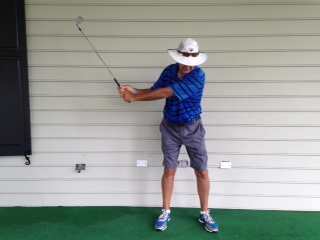
We all want more power in our golf swings. I am going to tell you it is not by overswinging your club in your back swing and breaking down your wrists or front arm.  Actually you will get more power from your swing if at the top of your backswing you are engaging your front shoulder by not breaking down your front arm and wrist……this actually might be a smaller swing but more powerful.

If you look at the picture, I have taken two PVC pipes and made a 90 degree angle. I swing back and made sure that the opposite end of the PVC pipe does not hit any part of me. If the PVC pipe hits me, I am breaking down either my wrists or my left arm at the top of my swing. Therefore this will disconnect my power source from my shoulders and hips and my downswing will be broken.

The best part of this drill is it can be done anywhere at anytime. If you practice enough with the PVC pipe the feel should transition to a better backswing with a golf club.
Tee Height for Driver

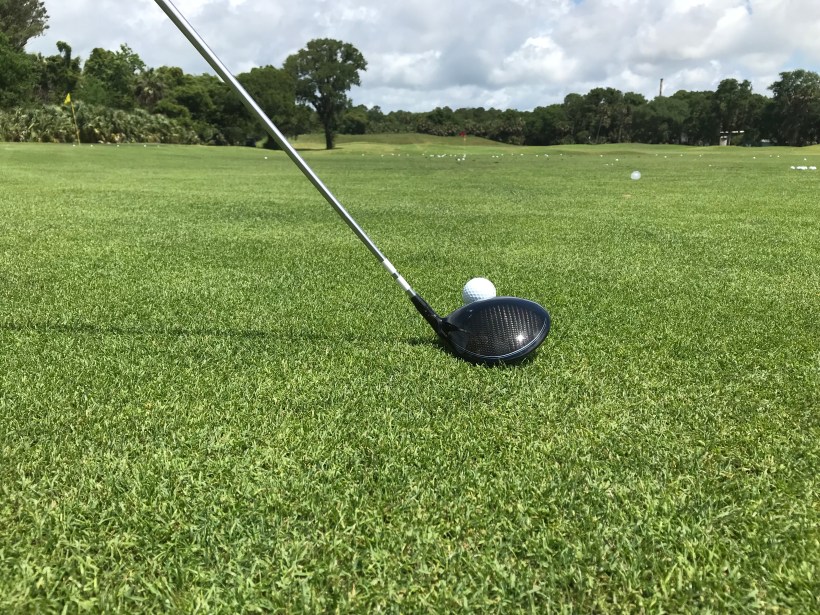
Yes, I do believe we need to talk about this. Even though it sounds so simple there is a specific height you need to tee up for a driver. Don’t get me wrong, you can play around with the height of the tee if you are trying to change the flight of your ball purposefully but for our sake we are going to keep it basic!

Technically the tee should pushed into the ground where the ball is half above the driver head and half below the driver head. This shouldn’t be total precision but the more you do it, the more consistent you can be.

Now, it will look different according to what size driver head you do have. Now a days the driver head keeps getting bigger and bigger so you might feel the tee needs to be higher then a driver way back in the day!


2nd Checkpoint: Club Face

This checkpoint can be a little difficult to determine. This is why I have grabbed a badminton racquet with a small shaft extender on it. Now I understand you might not have one of these in your garage, but you may also want to use a tennis racquet or just a bandminton without an extension on it is great too. Swing back and check where the face of the racquet is pointing. In the picture you can see the whole face of the racquet: this is good. If the face of the racquet is pointing up or down you are changing the club face. Therefore on the downswing you will need some maneuvering of the club to get it back to square for good impact.

After you have confirmed  a square club face try to focus on the feel in your arms, wrists and hands. If the clubface is not square at the top, first look at your wrists. Figure out good wrists and bad wrists. Using the big racquet will help you feel and see this position easier. After a little practice, go back to your club and check it out.

Hip Excerise

Oh the Winter!

Whether you are in the North or South, golf takes a little break for all of us. This is my all time favorite excercise to help your body stay active anytime anywhere.

Take a ball, any ball. My favorite is a medicine ball because it turns into not only a golf drill but a great excercise for your core. Set up like a golfer holding the ball between your hands, just like holding a club. Swing back about halfway then turn your hips forward and throw the ball towards your target. If your body moved properly the ball should go towards your target. If it didn’t move properly the ball is not going towards your target and you should feel like your arms/wrists/hands interfered.

You can do this drill 10-20 times in a row. If you are using a medicine ball your core should feel a great workout….not your arms and hands!


Understanding the Lofts of Your Clubs

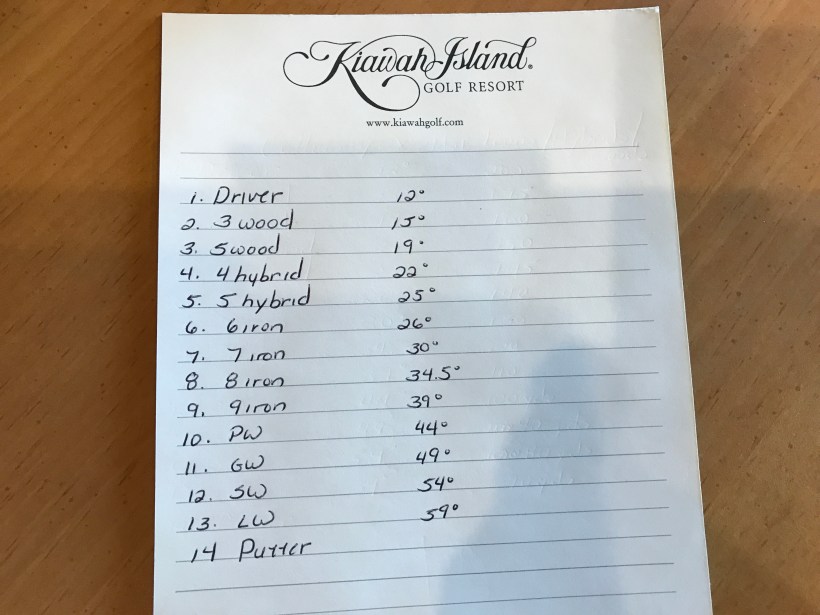
Let’s start first with what is loft. Loft is the angle of your club face. This angle determines how high your ball flies therefore helps provide how far your golf ball will go. If it was up to me, all the golf clubs would have the degree of loft on the top of the clubs and not a number. The number of the clubs really does not have a purpose. The loft is the most important.

As a golfer, you should first start by writing down the clubs you have in your bag. Then go online and look up your manufacturer’s specifications. Write down the lofts shown in the specifications that correspond to the club in your bag. Make sure you are looking up the brand and model of your club as some manufacturers use different lofts. Next, look to see what or if you have any gaps in your lofts or possibly the duplications. This will help determine if you need to start looking at purchasing a club to fill a gap or eliminate a club.


Yardages Control

When you play a golf course it is always good to know how they mark the yardage’s on the golf courses. Players have chosen for helping determine a holes yardage’s. Some golf courses uses stones to mark 100, 150, 200 etc. Other golf courses just mark 150 yards with a stick. While others go and mark the sprinkler heads.  Another option is using a range finder or gps. When you know how the golf courses are marked then you can start to determine where you are on each hole and what club to choose.

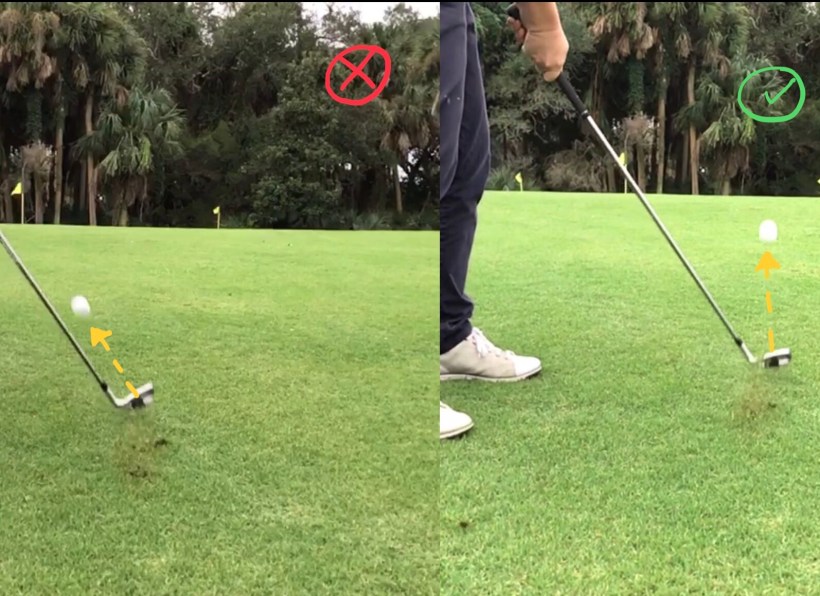
Now, depending on the type of player you are the yardage can mean different things. If you look at the picture above, I marked an X where the ball has landed and written the yardage to the hole: 50 yards. Most of us would take out our 50 yard shot and hit the ball. But what we are not accounting for is including the yardage of the ball after it hits the ground. When I am teaching a player on the golf course, I am noticing the students are hitting a 50 yard shot but when the ball lands it will roll more and either roll to far past the hole or even over the green. Then they look at me and said I hit the right shot but it didn’t work. While, they are not accounting for the extra distance when the ball lands. Therefore, if they took a PW and hit a 50 yard shot, the ball will roll at least 10-20 more feet if not more. Therefore they should be landing the ball either in the front of the green or the middle of the green. Therefore the player should be landing the ball at 30 or 40 yards and letting the ball roll to the hole. Each player has to determine their own yardage by including these three factors: the performance of the club, how the ball will react, and the condition of the golf course.

1st Checkpoint for Ensuring Proper Loft

As a teacher we begin to check our student’s swing through grip and setup. The first major checkpoint is the location of club face as the student transition to the backswing. This position can effect your entire golf swing. If the club face is not setting properly it is very hard to get the club face back to square at impact.

I took a picture of the correct positioning. Look at the club face (flat part of the head) is facing forward. The toe of the club (the top of the head) is pointing up and the heel (the bottom part of the head) is pointing down. This starts the club face properly, which ensures you are using your shoulders to swing back and not your hands and wrists.  Therefore, you are starting with a club face that can now get set for a good backswing and hopefully a better club face at impact.

Personal Par

So sorry for the lapse in posts, but it has been a couple of crazy weeks. Irma came through the south and luckily we survived here in the low country. Our thoughts and prayers go out to everyone that has been effected and hope they can get back into the swing of things sooner than later.

As we have watched golf on TV, even the professionals have a hard time shooting par. Therefore this blog is about shooting your personal par. Even though, our ultimate goal is shooting par, it takes time, practice, and patience to lower your score.

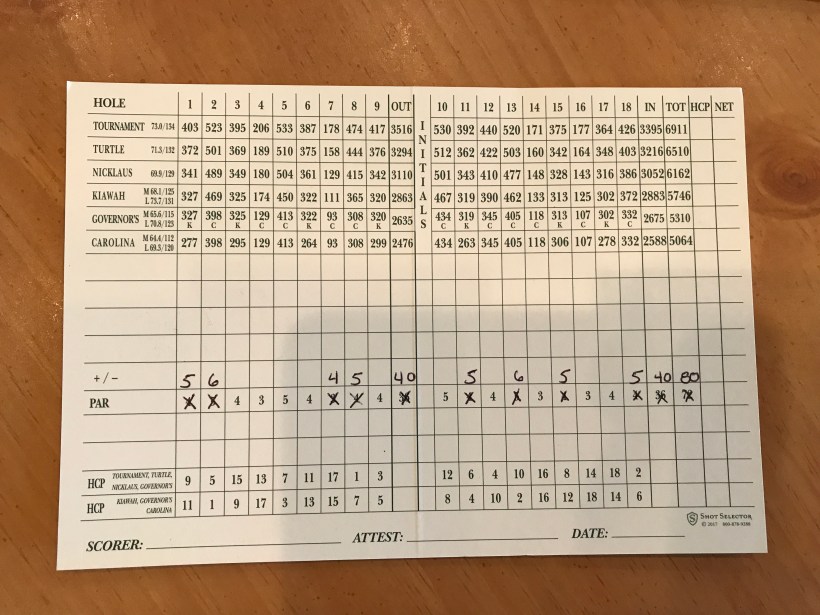
Take your scorecard of the course you are going to play and change your par. If you look at the picture above, I have changed a couple holes to bogey because I feel that these holes give my student a little trouble and if he/she had an extra stroke, it would ease their mind and allow the student to play the hole their own way. After I change the par, his/her goal is to shoot 80 which is a great goal for him/her right now. This is all about de-stressing yourself while you play. If a hole is too long and you have trouble getting to the green in 2 shots, then allow yourself an extra shot. Who knows, in the end, you might not need the extra stroke after all. Plus, this hopefully will also allow yourself to avoid getting a double bogey or more because you are so worried about shooting par. After a couple rounds, then you might want to change your personal par a little lower to challenge yourself.

There are many different forms of this personal par, such as playing 5’s: every whole is a 5 and if you get a 5 on every whole you shoot a 90. Another way is just add an extra stroke to each hole – bogey golf = 90 on 18 holes. I personally have done this my whole career. It has helped me and my students start to shoot lower without overwhelming yourself with shooting the “professional par”.

“The Grip”

One of the hardest things for me to teach any student is to hold your golf club properly with little pressure. Most golfers, including myself, grip the club to “death”. When we do this, the club becomes stiff and changes the dynamic of the golf club. It is very similar to holding a tambourine. When you hold the tambourine tight and shake it, the tambourine does not sound proper- it is clunky and short. Now if you hold it gently and shake it plays its proper music. A correct grip pressure is light and relaxed. Some people say it is like holding a baby bird, a full tube of toothpaste, or a shopping bag/ briefcase.  I promise you will not throw the club if you do this, providing the grips are in good condition.

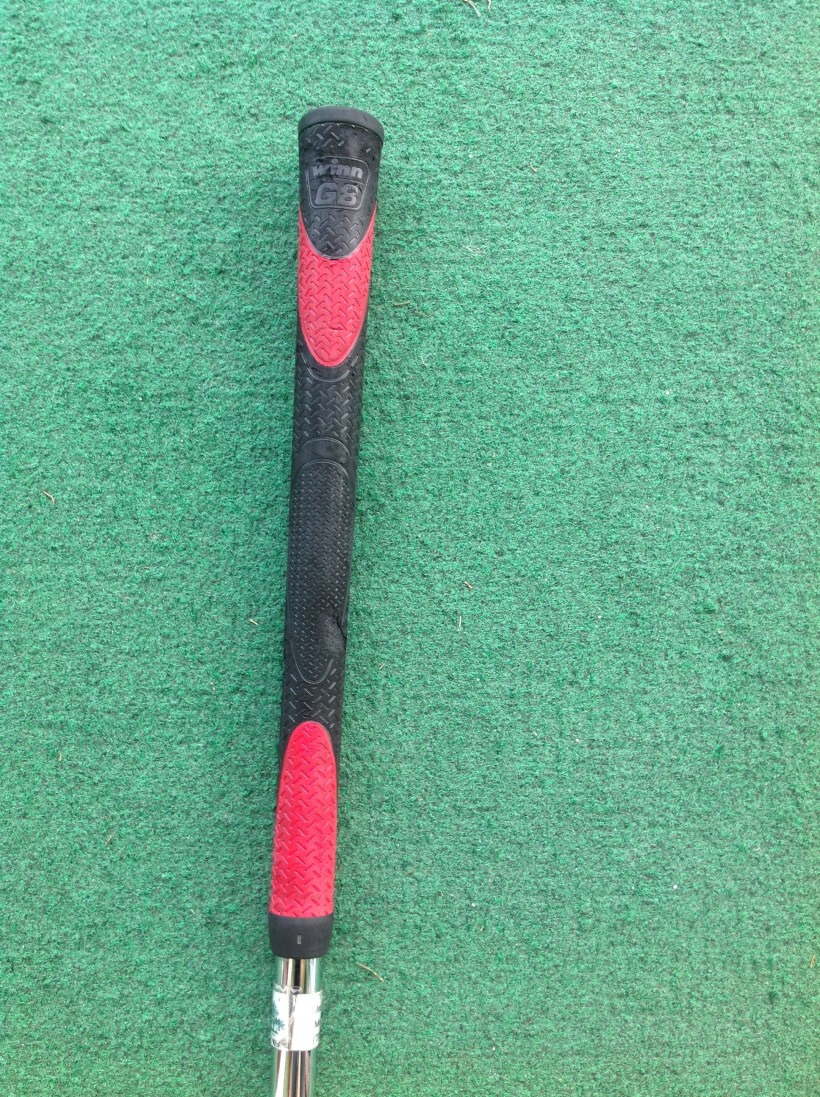
Now, we can look at our grips to help us aid in not holding it tight. Especially as the summer comes to an end, it is time to check your grips. If you see the picture above, this is a worn out grip. This can effect your grip pressure tremendously. A worn out grip has no grip left- the sticky stuff. When this happens you will have to grip tighter just because your grips are worn. Especially after a hot summer, our grips can get slippery from our hands. First, you can wash your grips to clean all the sweat, dirt, etc. off of them. Take your kitchen dish soap and a good scrub brush. Put your grips under the running water and with soap scrub them until the water turns a lighter grey and set them on a towel to dry over night. By the morning if your grips are still in good condition they should feel better so you do not have to grip as tight.  If they are not better or have worn spots like the picture above it is time get new grips, which most golf shops can do for you in less than a day.

Ensuring your swing is starting on “Plane”

If you ever have played with me this is my drill of choice to improve my swing. I have always been a flat plane swinger (I love playing softball)! You will find me doing this before every round of golf I play for a couple minutes.

For those who do not know what “plane” means the definition is the path that your club swings on. Most people are so used to playing softball, tennis, racquetball etc. Most common swings in various sports are horizontal swings with the ball in mid air. Golf is not like these sports. The ball is on the ground, therefore we must swing a little more vertical so that our club goes up and then “what goes up must come down” and hit the ball. To ensure you are starting your swing on plane stand up with your butt brushing against a wall (a wall you can hit and not damage or don’t mind it gets damaged a little). Then get in your setup position with club. Swing back halfway. Your club on the backswing should not hit the wall at all, and technically should be parallel to the wall. If you have hit the wall anywhere you are not taking your club back on plane.  I love this drill because you can keep your eye on the wall and feel what the backswing should feel like. If you hit the wall, you will feel it is wrong and be able to try to fix it without technically having to look at it.

Stay tuned for future blog on how the wall can help you follow through better too!